
Milking It
The climate crisis: Dairy farmers must be part of the solution

Some years ago I worked alongside a respected dairy farmer and skilled educator, promoting steps farmers could take to use water more efficiently in the dairy shed and to reduce water loss out on the farm. There were environmental and financial benefits in doing so (there still are!).
A farmer involved in the programme gave me probably the best advice ever for my work in communications to encourage behaviour change. He quietly offered: “If you want people to come along for a sharing of information, don’t call it a meeting call it a barbeque.”
There’s been a lot of milk through the vat since then. We have deepened our knowledge about the environmental impact of dairy farming. And we know more about the health effects of consuming dairy products.
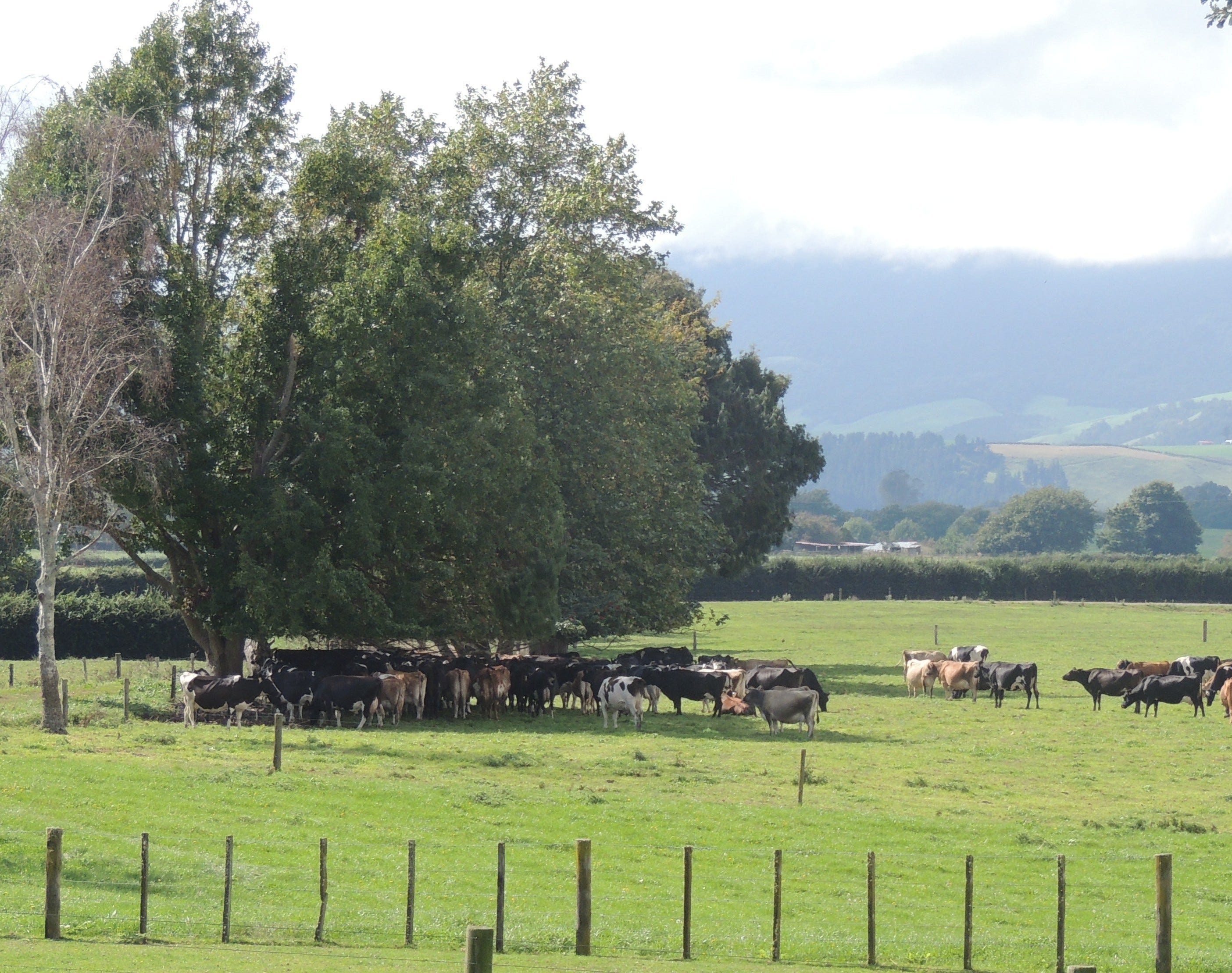
The environment bit. Dairy cow numbers in New Zealand now stand at 5.9 million, an 82% increase since 1990. This ballooning of the total herd has had devastating effects: land degradation, water pollution and a massive contribution to the country’s greenhouse gas (GHG) emissions.
The increase in synthetic nitrogen fertiliser use (a 600% rise over a 30-year period) and the use of imported feeds have allowed the increase in cow numbers. Unfortunately, fertiliser not taken up by the plants (plus concentrated patches of cow urine) can leach from the soils, polluting groundwater, lakes, rivers and drinking water. Around half of the entire river length in the country is now considered unsafe for swimming.
Nearly 50% of the country’s GHG emissions come from agriculture. Livestock farming, with its methane emissions, contributes almost all of this, with dairy leading the way.
The human health bit. An inconvenient truth for the livestock industry: Animal protein is not necessary for a healthy diet. Indeed, we’re better off without it. A whole food plant-based (WFPB) diet is a healthy alternative. Research shows that a WFPB diet can have an ameliorating effect on, among other things, cardiovascular disease, diabetes, obesity, inflammatory arthritis and the likes of bowel, breast and prostate cancer.
Canada has taken a cue from this. The country’s food guide for healthy eating (revised in 2019) no longer includes milk or cheese. (Our own Ministry of Health guidelines still encourage consuming at least two or three servings of milk and milk products a day.)
Then there are ultra-processed foods. Consuming these is associated with hypertension, diabetes, obesity and unhealthy levels of cholesterol and triglycerides in the blood. Just think of all that milk powder shipped off as a low value commodity to be used as an ingredient in such low-grade foods. Mars is one of Fonterra’s largest customers, with farmers’ milk going into well-known products like Mars Bars, M&Ms and Snickers, crows the company’s own website.
The political bit. Agriculture as an industry has vehemently opposed inclusion in the Emissions Trading Scheme and governments have continually pushed off the time when farmers must take responsibility for their GHG emissions (leaving all the rest of us to carry the can).
The current coalition Government formed its own panel of scientists with the express purpose of lowering the methane reduction targets set earlier by the independent Climate Change Commission.
As for nitrates in drinking water, the Ministry of Health is satisfied with the ‘maximum allowable value’ (MAV) set by the World Health Organization in 1958. Yes, 1958. This in spite of research by top New Zealand health and environmental scientists, which supports lowering the MAV and adding nitrate in drinking water to the list of risk factors for colorectal cancer.
Nitrates in drinking water
Greenpeace Aotearoa has stepped in where governments won’t, offering free test kits for households using bore water. Residents, especially in rural areas, can use this service to check whether they could be at risk of, for example, colorectal cancer and preterm birth. Greenpeace also has an interactive map showing nitrate levels across New Zealand, created using data from over 2,000 tests and regional council data.
The future. In their Climate Shift campaign at the last election, Greenpeace Aotearoa, Forest & Bird and Oxfam Aotearoa called for a phasing out of synthetic nitrogen fertiliser and imported animal feed, a reduction in cow numbers, and no new large-scale irrigation schemes.
The UN’s Intergovernmental Panel on Climate Change has confirmed that land-use change and a shift to plant-based diets are crucial if we are to tackle the climate crisis successfully.
Do this and it will be a win for the environment, for the health and well-being of farm workers and their families, and for the long-term viability of farming in New Zealand.
Gord Stewart is a sustainability consultant with a background in environmental management and economics.
Abundance of opportunities
Dairy farmers need to think long term. Climate change is already having its effects and precision fermentation is an existential threat to their industry. Regenerative and organic practices make sense while diversifying away from livestock farming. Kiwifruit, avocado, berries, quinoa, hemp, almonds, bananas and other tropical fruit offer possibilities. Climate, terrain and soil type will need to be considered as well as conversion costs and financial returns.
On topic
Regenesis: Feeding the World Without Devouring the Planet by George Monbiot, Allan Lane/Penguin Books, 2022
Mountain to Sea: Solving New Zealand’s Freshwater Crisis, Mike Joy (editor), BWB Texts, 2018
On rewilding farm land: Monbiot as above; Wilding: The Return of Nature to a British Farm by Isabella Tree, Picador Books, 2019; kneppestate.co.uk; rewilding the Netherlands.
On animal protein, dairy products and whole food plant-based diets: The China Study: The most comprehensive study of nutrition ever conducted by T Colin Campbell, PhD and Thomas M Campbell II, MD, Ben Bella Books, 2005 (revised and expanded in 2016). This got the whole thing started. See also: NutritionFacts.org; Health Concerns about Dairy and Evidence Based Eating NZ (ebe.nz).